

.jpg)


.jpg)
.jpg)

The top 6 excuses for not recycling e-waste – and why you should forget about them
.2025-08-08-08-58-22.jpg)
Take the old toaster or hair dryer to a disposal point? That's too much effort – and there's nothing to be gained from the scrap anyway. Or is there? We clear up the five most common excuses for not recycling e-waste.
Unless they are repaired or sold on, old electrical appliances usually get left at the back of a cupboard. Or worse still, they end up in the household waste. This is often due to common excuses based on false myths about recycling. It's high time to finally dispel them.
Recycling myth 1: Scrap is scrap and therefore worthless!
False: When it comes to disposing of old household appliances, the idea that "scrap is scrap" is widespread. Instead of taking old and broken electrical appliances to a collection point, people often stash devices away in a cupboard at home. Unfortunately, this means that the recyclable materials contained in the appliances cannot be reused. If, on the other hand, old toasters or refrigerators are properly disposed of, elements such as copper, aluminium, zinc, brass, iron and plastic can be recovered. After recycling, these materials are put back into circulation so that they can be used to make new appliances. This chain only works if e-waste is disposed of via a collection point and not as household waste.
Recycling myth 2: Repairing an old appliance makes more sense than buying a new one!
Not always. For minor defects and newer appliances, repair is almost always worthwhile. However, large appliances such as washing machines or refrigerators that are more than ten years old often consume significantly more energy and water than modern models. An old refrigerator can cost 100 francs or more in additional electricity costs per year. In such cases, buying a new appliance can make more sense both ecologically and economically – provided that the old appliance is properly recycled.
Recycling myth 3: Disposing of electrical appliances will cost me a lot of money!
False: Thanks to the advance recycling contribution (ARC), which is already included in the purchase price, disposal has already been paid for. You can return your old appliance free of charge at specialist retailers, regardless of where you bought it, or take it to one of the 640 official SENS collection points. The subsequent disposal has already been paid for.
Recycling myth 4: Whether or not I recycle my e-waste as an individual makes no difference anyway!
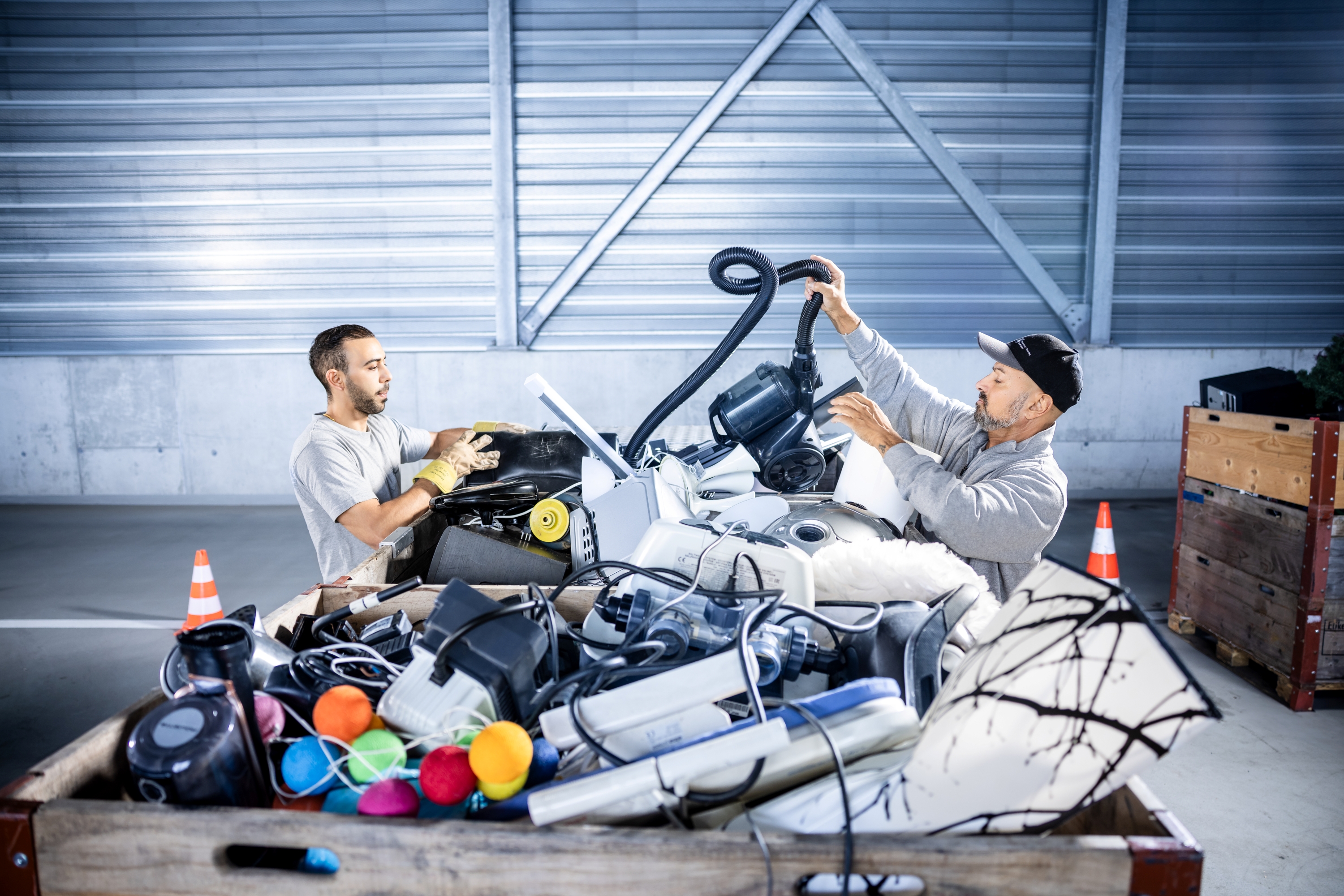
False. Swiss people collect around 11 kilograms of e-waste per capita every year, totalling 100,000 tonnes! Switzerland benefits several times over from recycling this waste: imports of raw materials decrease, transport costs and emissions are eliminated, jobs are created, and the environmental impact of raw material extraction is reduced. Your old toaster or hair dryer is an important component of this system.
Recycling myth 5: My household waste is separated again before incineration anyway!
False: Our household waste ends up directly in the waste incineration plant – without prior sorting. It is true that metals are extracted from the slag after incineration, but by then many valuable materials have already been lost: copper, aluminium and other metals have been oxidised and mixed by combustion, plastics have been completely burnt, and precious metals and rare earths can no longer be cleanly separated. In addition, improper treatment can release pollutants from electronic components, for example when mercury leaks from lamps or the cooling circuit is damaged. Electrical appliances belong at collection points or with retailers – never in household waste.
Myth 6: 'Our electrical appliances all end up in Africa anyway!'
False. This myth persists, but it does not reflect reality – at least not if you dispose of your appliances correctly. Around 99% of waste electrical appliances collected at Swiss specialist retailers and SENS collection points are also processed properly and in an environmentally friendly manner in Switzerland.
The remainder is exported to OECD countries if, for example, an appropriate recycling facility does not exist in Switzerland or processing is not worthwhile due to low volumes – such as photovoltaic modules. These are exported to neighbouring countries such as Germany or France to keep transport routes short. These exports are carried out transparently and under strict conditions.
It is important that appliances are disposed of correctly – at retailers or at an official collection point. Anyone who simply leaves their old appliance on the street or disposes of it in an uncontrolled manner cannot trace what happens to it. In such cases, there is indeed a risk that it will end up in illegal channels.
Conclusion: Recycling starts with each individual
Proper recycling is neither expensive nor complicated. Electrical appliances should never go in household waste, returning them via collection points or specialist retailers is free of charge, and every contribution counts. Together we close the loop and ensure that valuable raw materials live on in new products.
.2026-07-17-14-34-47.jpg)