



.jpg)


.jpg)
.jpg)

SENS highlights of the year 2025
2025 brought a wide range of projects: from the now well-established collection of e-cigarettes to a project on the reuse of photovoltaic modules, the simplification of declaration processes, a new website, creative awareness campaigns and important regulatory developments.

Management team newly structured
The leadership team behind SENS eRecycling
In the past year, SENS eRecycling refined its management structure in a targeted manner, laying the groundwork for the organisation’s future direction. Following Sabrina Bjöörn’s departure from the foundation after almost ten years of dedicated service, Tobias Müller, a proven problem solver, joined the SENS team as Head of Customer Relations in August 2025. He also serves as Pasqual Zopp’s deputy in this role.
Tobias has a strong background in customer management and a proven track record of managing key accounts. With his commitment, a strong understanding of stakeholder needs and his passion for sustainable solutions, he is strengthening the customer team and helping to expand the collaboration with SENS stakeholders.
At the same time, a structure was put in place on the management team that ensures greater transparency and better governance in key business areas and strengthens cross-departmental collaboration. The management team consists of Christian Bollinger (Head of Operations), Nando Erne (Head of Marketing & Communication), Sibylle Sutter (Head of Finance, Controlling & HR), Tobias Müller and Pasqual Zopp. The body is the main platform where strategic and operational topics are discussed.
In recent months, the team has clarified responsibilities, defined key management principles and spurred collaboration across all areas. This gives the organisation a solid foundation to steer its future direction and meet growing demands.
Conclusion
The new management team has been up and running since mid-2025. With clear responsibilities and shared leadership principles in place, SENS eRecycling is stronger internally and well positioned for the road ahead.
Regulatory changes
Charting a course for the circular economy and producer responsibility
The regulatory framework for the circular economy is evolving. New regulations are tightening producer responsibility, creating greater clarity in enforcement and prompting existing industry solutions to evolve.
Partial revision of the Environmental Protection Act
The partial revision of the Swiss Environmental Protection Act (EPA) came into force on 1 January 2025. Thanks to the revised law, the circular economy is enshrined for the first time as a guiding principle in environmental law, and the waste hierarchy is strengthened: waste prevention, reuse and recycling are clearly prioritised over energy recovery. At the same time, the law introduces new measures to promote repairability, longer product lifespans and closed material cycles.
The revision is particularly relevant for SENS eRecycling because the extended producer responsibility is being tightened and opportunities are arising to bring previously unaffiliated market participants into the SENS system. In addition, the Federal Council is empowered to set broader requirements for products and packaging – on take-back, reuse, recyclability and consumer information. This cements the role of industry solutions and privately organised collecting and recycling systems.
Revision of the ADWO
The partial revision creates the legal basis for expanding existing industry solutions and developing new ones. The details are being defined gradually through subordinate ordinances, in particular through the Ordinance on the Avoidance and Disposal of Waste (ADWO).
Among other things, the ADWO specifies the criteria for recognising industry organisations. SENS eRecycling engaged with the Federal Office for the Environment (FOEN) in 2025 to outline how existing mechanisms in the take-back system are being implemented and how the various stakeholders are being integrated in the process. The consultation procedure for the corresponding ADWO revision was launched on 22 December 2025 and ran until 12 April 2026.
Consultative procedure for the revised ORDEE
The FOEN launched the consultation procedure for the revised ORDEE in the summer of 2025. The aim is to clarify the expanded scope of the extended Ordinance on the Return, Taking Back and Disposal of Electrical and Electronic Equipment (ORDEE) and to update and specify the equipment catalogue for electrical and electronic equipment.
The revised ORDEE is intended in particular to clearly define which appliances and product categories will fall under producer responsibility in future. This is intended to reduce grey areas, capture new product forms and enhance legal and planning certainty.
The revised ORDEE is central to implementing extended producer responsibility. It is currently scheduled to enter into force in autumn 2026. The revised ORDEE is expected to extend coverage to photovoltaic modules, devices integrated into furniture, buildings and vehicles, and certain medical devices.
Conclusion
The partial revision of the Environmental Protection Act enshrines the circular economy as a guiding principle, tightens producer responsibility and paves the way for privately organised take-back systems to evolve.
Proactive fund management and stable ARC
Building a viable take-back system
For the SENS system to remain financially sound in the long term, each fund must be managed within appropriate limits. This is the only way to ensure fair and stable advance recycling contributions (ARCs) and sustainable recycling.
Several projects that pursue a common goal were launched in 2025: to better understand fund performance, respond promptly to funding pressures and ensure a framework for the ARC that is fair and viable in the long term.
Forecast model for large household appliances
A forecast model was developed in 2025 for the large household appliances fund. It focused on analysing key variables and their interactions, testing their sensitivity and modelling several scenarios through 2030. The trend in average weight, for example, emerged as a key factor influencing the fund.
The findings provide transparency for external stakeholders and will inform future decisions. The model has already been shared with the industry. The aim was to align expectations on future market trends, build a shared understanding of key variables and demonstrate SENS eRecycling’s expertise. Next, SENS eRecycling plans to develop similar forecast models for other funds and conduct intensive data collection.
Safeguarding the small appliances industry solution
SENS eRecycling also conducted an in-depth review of the small appliances fund’s financial position. It found that the fund held no excess reserves, so rising disposal costs made an urgent adjustment necessary. The reasons for these rising disposal costs include the increasing complexity and miniaturisation of devices, declining material recovery yields, fire risks from lithium-ion batteries, and rising labour, fuel and energy costs. The calculations showed that without adjustments, the fund faced a shortfall. To safeguard the fund, SENS eRecycling modelled various scenarios and determined the necessary ARC increase, which took effect on 1 January 2026.
Throughout this process, SENS eRecycling kept its ARC partners closely informed. The adjustment was implemented without any partner withdrawals, and the fund is expected to stabilise in 2026. SENS eRecycling will continue to monitor the fund closely.
Redefining fund limits
A third sub-project focused on the fundamentals of fund management itself: existing uniform fund limits were not appropriate for funds with low collection rates, as lower ARC income could slow the build-up of the fund balance. SENS eRecycling therefore worked with the Finance Committee to develop differentiated criteria. For funds with low collection rates, the quantity sold now serves as the reference value, as it reflects expected future costs and thus enables the advance recycling fee to be set at a sustainable level.
Conclusion
In 2025, forecasts models, differentiated fund limits and targeted adjustments created the basis for keeping SENS funds stable in the long term and ensuring fair advance recycling contributions.
Automated tariff finder tool
Digitalising the declaration processes
For many SENS eRecycling customers, declaring electrical and electronic equipment placed on the market is a time-consuming process. SENS maintains around 1,900 products in its tariff and appliance list, entailing complex declaration obligations: customers with products in all 12 categories must navigate up to 15 attribute-based characteristics and as many as 33 different declaration conditions. Making manual declarations throughout the year ties up significant resources and introduces potential for error.
Automation as the solution
The automated tariff finder tool project addresses this complexity through a digital approach: the new solution uses structured product master data and quantity data to generate declarations automatically – eliminating the need to make manual entries in the web portal. This not only significantly reduces the administrative burden on existing customers but also removes a major hurdle for potential customers joining the SENS system and enhances its appeal.
The project followed a methodological approach: it began with an initial data assessment and definition of the objectives. A specialised database was then built using the existing tariff and appliance lists, incorporating all attribute information and conditions required for product declarations. The database is currently in the proof-of-concept phase and is being validated using test data.
Strategic importance and added value
The initiative directly supports SENS eRecycling’s strategic objectives. First, it reduces the cost burden on customers – a key factor in attracting new customers. Second, it maximises the value of the SENS take-back system through automated, timely and complete declarations.
The benefits extend across the entire organisation: revisions can be carried out more quickly and efficiently; the customer team receives better structured data for customer advisory services; and the system as a whole gains in transparency and equal treatment. This builds trust with contractual partners and reduces declaration errors.
The goal – having at least 80 per cent of all electrical and electronic products declared automatically – is deliberately ambitious yet realistic. If SENS eRecycling achieves this, it will constitute substantial progress. However, automation is also heavily dependent on the quality of the master data provided by our ARC partners: the better the master data quality, the more products can be declared automatically. SENS eRecycling has yet to fully implement the tool, pending the results of the ongoing testing phase.
Conclusion
In 2025, forecasts models, differentiated fund limits and targeted adjustments created the basis for keeping SENS funds stable in the long term and ensuring fair advance recycling contributions.
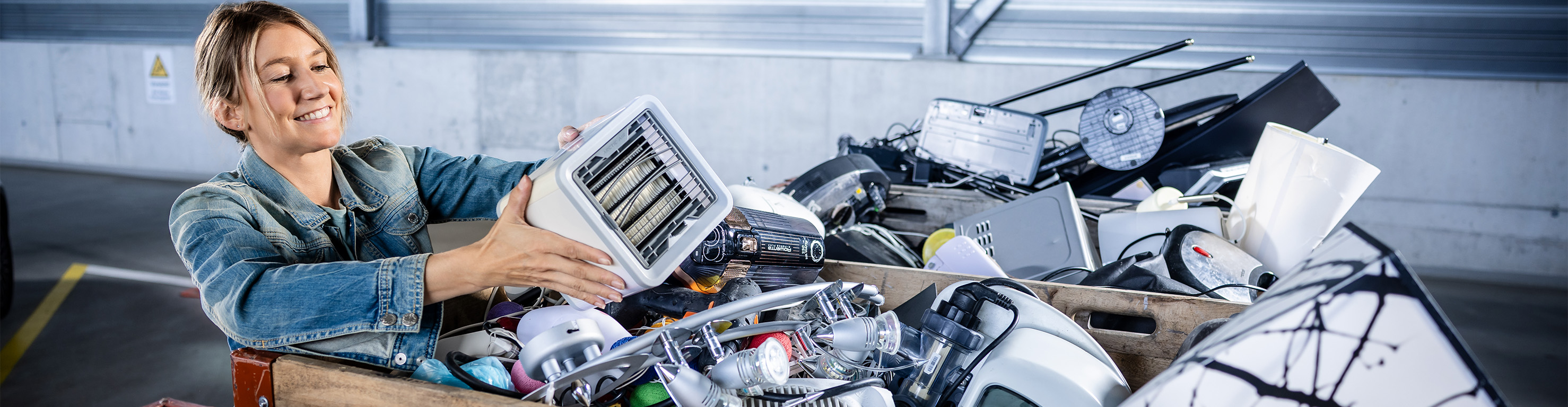
Study on the circular economy for electrical appliances
How knowledge, attitudes and emotions shape behaviour
What motivates Swiss consumers to repair, resell or properly recycle their electrical appliances? And what barriers stand in the way? The Institute for Market Supply and Consumer Decision-Making (IMaK) at the University of Applied Sciences and Arts Northwestern Switzerland (FHNW) investigated these questions on behalf of SENS eRecycling.
As part of a comprehensive four-phase research study, more than 1,000 adults from German-speaking and French-speaking Switzerland were surveyed between August and September 2024 about their knowledge, perceptions, attitudes and behaviour regarding circular economy services for electrical appliances. The findings were published in 2025 and presented to the SENS eRecycling partners at an International E-Waste Day webinar on 14 October 2025.
Key findings
The study reveals significant knowledge gaps: while over 75 per cent of respondents know where they can recycle electrical appliances, fewer than half know where they can buy second-hand appliances or have faulty appliances repaired. As a result, these services are rarely used. The size and value of an appliance largely determine what happens to it: the more expensive an appliance is or the more emotionally attached someone is to it, the more likely it is to be repaired or given away. For cost-benefit reasons, people prefer to resell expensive appliances that still work. Smaller appliances, on the other hand, are more likely to end up in the rubbish – improper disposal that triggers feelings of guilt in many respondents.
The study also shows that disused electrical appliances are usually passed on or recycled during certain events such as moving house, buying new appliances or clearing out – rarely promptly or periodically. Positive feelings such as pride and satisfaction when repairing or giving away appliances increase the use of corresponding services, while hygiene concerns as well as a “second-choice image” discourage some people from buying second-hand appliances.
Implications
The more experience people have with individual circular economy services, the less they are perceived as tedious and the more often they are used. People who believe that broken electrical appliances should be repaired and working appliances reused rather than disposed of are much more likely to use repair and reuse services. The findings are clear: greater knowledge, better accessibility and positive experiences are key to a more circular economy.
Conclusion
The study shows that knowledge gaps, lack of accessibility and negative perceptions inhibit the use of circular economy services – positive experiences and better information are the key to increased repair, resale and recycling.

Relaunch of sens.ch
New website for optimal user navigation
The redesigned sens.ch website went live in August 2025. The relaunch followed a comprehensive overhaul of the site, with clear objectives: making content easier to find, reaching various target groups more effectively and raising the profile of projects such as the Circular Platform.
User-centred development
The project began by interviewing various target groups to capture their specific needs. The insights gained made it possible to overhaul the information architecture in a targeted way. The key difference: the website is no longer organised by topic but by target group – private individuals or business partners. This restructuring allows visitors to find the information they are looking for much more quickly.
Authentic imagery
Alongside the structural overhaul, a new set of images was created. Photo shoots at retail outlets, collection points and recycling facilities captured authentic insights into the circular economy for electrical appliances. These images show what SENS eRecycling and its partners are doing on the ground, making the processes behind the recycling tangible.
Positive response
The new website has been well received. In 2025, sens.ch recorded 180,000 active users. The improved navigation and clear target group focus make it easier to access information on the proper recycling of electrical appliances and strengthen SENS eRecycling’s position as the central point of contact for the circular economy in Switzerland.
Conclusion
The redesigned website’s target-group-oriented structure makes information easier to find, while its authentic imagery vividly illustrates SENS eRecycling’s role as the central point of contact for the circular economy.
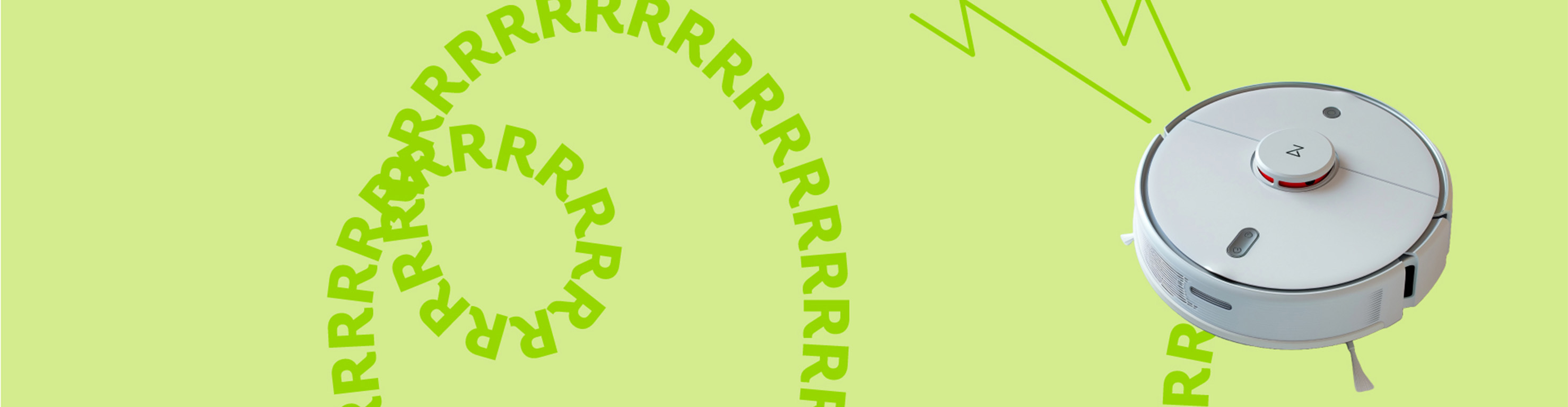
The sound of the circular economy
New campaign makes the circular economy audible and accessible
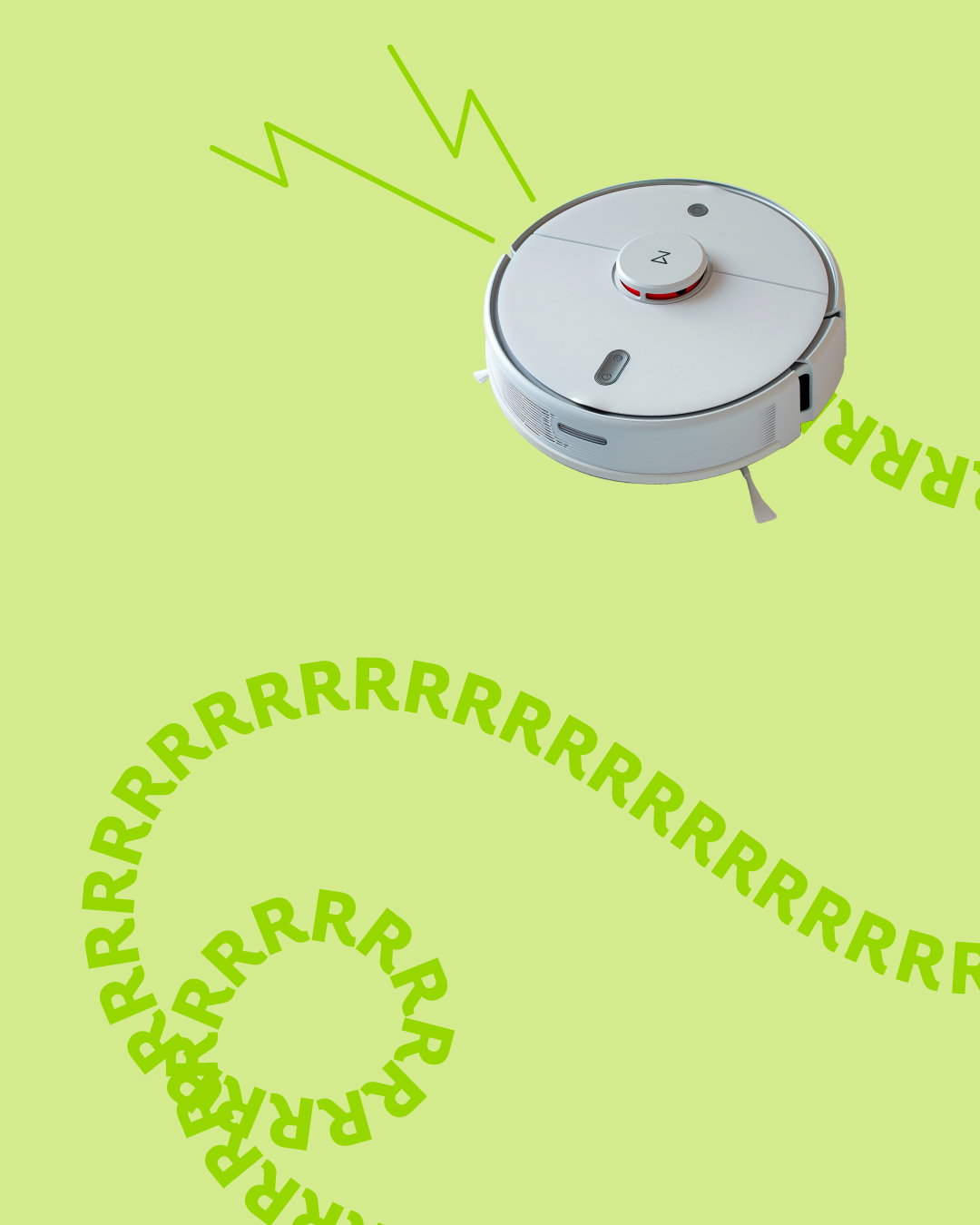
In 2025, SENS eRecycling launched a new awareness campaign that makes the circular economy audible and accessible in an unusual way: everyday sounds made by faulty electrical appliances – the hum of an electric shaver, the rattle of a blender, the creak of a broken fan – become the starting point for communicating about reuse, repair and recycling.
The “Sound of Circular Economy” campaign was rolled out across various channels. Videos posted on social media conveyed the message through dynamic typography and real sound recordings. Alongside this, an audio campaign used the sounds of faulty appliances to raise awareness of the circular economy.
Reaching consumers at the point of purchase
A particular focus was placed on reaching consumers at the moment they purchase a new appliance. In one initiative, SENS eRecycling partnered with Digitec and Galaxus to include an information flyer in online orders containing electronics. The flyer encouraged customers to order an Electro Recycling Bag to recycle their old device properly. Orders exceeded expectations. This shows that consumers are open to sustainable offerings at the moment of purchase and are happy to take them up – particularly when replacing an old device with a new one.
Prestigious design award
Through the consistent use of onomatopoeia and a unified visual identity across all channels, the campaign is instantly recognisable, reminding consumers to act sustainably with their electrical appliances. The concept’s strength is confirmed by a prestigious award: the campaign, developed by SENS eRecycling together with the agency Suan Branding GmbH, won the iF DESIGN AWARD 2026 – one of the world’s most coveted design awards.
Conclusion
The “Sound of Circular Economy” campaign brings the circular economy to life through the everyday sounds of faulty appliances – sounds that consumers will remember when their own appliance starts to fail, prompting them to recycle, repair or reuse it.
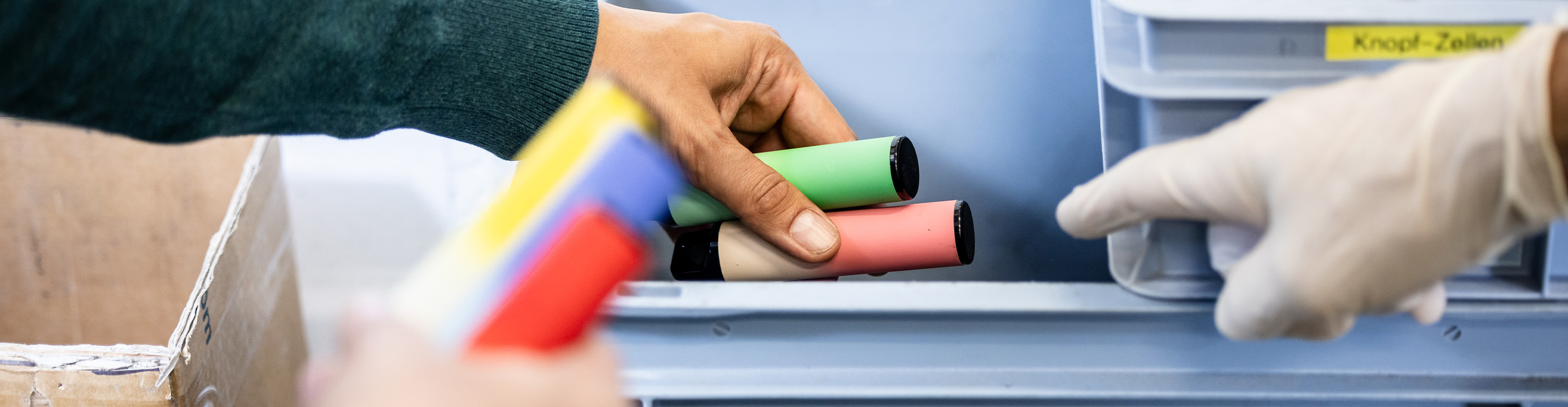
Industry solution for e-cigarettes
Raising awareness of proper vape recycling
An industry solution for e-cigarettes has been in place since July 2023. Every e-cigarette – whether disposable or reusable – contains a lithium-ion battery and therefore counts as an electrical appliance that must be properly recycled. Used e-cigarettes are collected at points of sale and collection points, and since late 2024 also via the free Vape Recycling Bag, enabling consumers to return them for recycling by post.
Too many e-cigarettes still end up in household waste, in the environment or in the wrong waste streams. To increase the collection rate, the awareness campaign was expanded in 2025 to target younger consumers. The focus was on promoting the Vape Recycling Bag as an easy and convenient return service.
Reaching the target group where they are
The 2025 communications strategy focused on reaching consumers at specific moments. The social media campaign was continued, targeting younger consumers on their preferred channels. Digital Out-of-Home (DOOH) advertising was also significantly expanded – with a focus on events and leisure activities.
During the summer, campaign messages appeared along the routes to major events: the UEFA Women’s EURO, the Street Parade in Zurich and various music festivals across Switzerland. People heading to the stadium or festival were reminded to recycle their e-cigarettes properly.
Winter campaign in ski resorts for the first time
For the ski season 2025/2026, SENS eRecycling launched a winter campaign for the first time. DOOH advertising on ski buses, at return points in various ski resorts, at mountain railway stations and at an après-ski popup bar raised awareness of vape recycling. In addition, après ski bars and winter festivals were contacted directly and encouraged to order awareness-raising and collection materials.
Positive response
Maintaining a consistent presence where the target group spends its time is paying off. The collection rate increased from 16% in 2024 to 28% in 2025. Demand for the Vape Recycling Bag was high in 2025: a total of 25,926 bags were ordered by end consumers and partners. The campaign will continue in 2026 to keep improving the collection rate and build lasting awareness of the proper recycling of e-cigarettes.
Conclusion
By reaching consumers at events, festivals and winter sports venues and promoting the Vape Recycling Bag, SENS eRecycling significantly raised awareness of proper e-cigarette recycling in 2025.
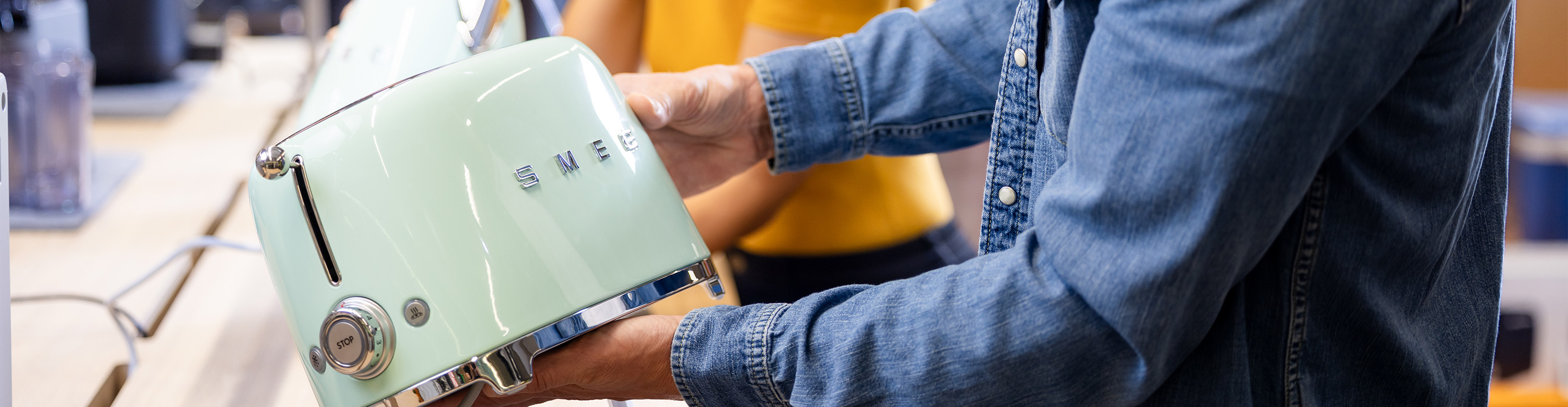
Risks associated with online purchasing
Foreign purchases jeopardise the take-back system
Where do Swiss consumers buy their electrical appliances – and do they understand what buying online from foreign retailers means for the recycling system? These questions were explored by HF Partners, a spin-off of ETH Zurich, in a study conducted in September 2025. SENS eRecycling participated in the project alongside the Swiss Toy Association (SVS), Handel Schweiz and the Swiss Retail Federation.
Clear trend towards buying abroad
A representative survey of 2,137 Swiss consumers found that 35 per cent would probably or very likely buy their electrical appliances abroad. For most, the deciding factor is the lower price. By contrast, 37 per cent buy their appliances exclusively from brick-and-mortar retailers.
The problem with the missing recycling contribution
However, very few consumers are aware that the prices charged by many foreign online retailers do not include the advance recycling contribution (ARC). While foreign online retailers are legally required to take back appliances, few ever do. The result: Appliances sold without the advance recycling contribution also end up in the SENS eRecycling take-back system, jeopardising its long-term financial viability.
Individual responsibility required
Unlike many neighbouring countries, Switzerland’s take-back system for electrical appliances is not state-run but organised by the private sector. It only works if everyone contributes. On Black Friday and during the Christmas shopping season in 2025, SENS eRecycling urged consumers making online purchases to check whether their retailer is connected to a Swiss recycling system. If not, they had the option of paying the voluntary ARC of CHF 5.00 online and taking responsibility for the financial viability of the recycling system.
Conclusion
The study found that 35 per cent of Swiss consumers would probably or very likely buy their electrical appliances abroad – often unaware that in doing so, their appliance comes without the advance recycling contribution, jeopardising the take-back system.

Swiss PV Circle project completion
Laying the foundation for the reuse of PV modules
As the number of installed photovoltaic systems grows, so does the volume of disused modules reaching the end of their life cycle. The Swiss PV Circle project examined how this challenge could be tackled through reuse.
The potential for reuse
According to experts from the Bern University of Applied Sciences, around half of the photovoltaic modules that end up in the waste stream each year could be reused as second-hand modules. Their use would make particular sense where financial resources are limited or sustainability is a priority. However, many modules are damaged during dismantling, making them unsuitable for reuse. In addition, insufficient data sharing between players in the photovoltaic value chain hampers efforts to keep modules in circulation.
SENS eRecycling, Swissolar, the Bern University of Applied Sciences and other partners from the solar and energy industry collaborated for a year and a half on the project, which concluded in July 2025. The central question was: How can the reuse of PV modules be facilitated and promoted in Switzerland?
From project to practice
The project created an important foundation for enabling reuse of photovoltaic modules, including a platform prototype based on a data model that enables an early assessment of the right circular strategy for end-of-life modules. A new forecast model project that between 23,000 and 90,000 tonnes of PV modules will enter the waste stream by 2050. In addition, a step-by-step guide for installers was developed that describes how used modules can be technically tested, assessed and recommissioned.
Environmentally sound, economically challenging
The market study shows that, environmentally, reuse offers clear advantages as it conserves resources and reduces waste. Economically, however, profitability remains a challenge due to the low price of new modules. Second-hand modules are currently deployed mainly in smaller applications such as on balconies or in allotment gardens.
Policy recommendations for implementation
The project’s key outcomes include policy recommendations for better framework conditions: financial incentives such as an advance reuse contribution or reuse bonus, a nationwide labelling and certification system, systematic data collection during installation and dismantling, and a harmonised approval process. It is now incumbent upon policymakers and industry to implement these measures.
Conclusion
The project laid the foundation for reusing photovoltaic modules, delivering a platform prototype, forecast model and installer guide – though economic challenges remain.
“Brandgefährlich” campaign
For safe collection points
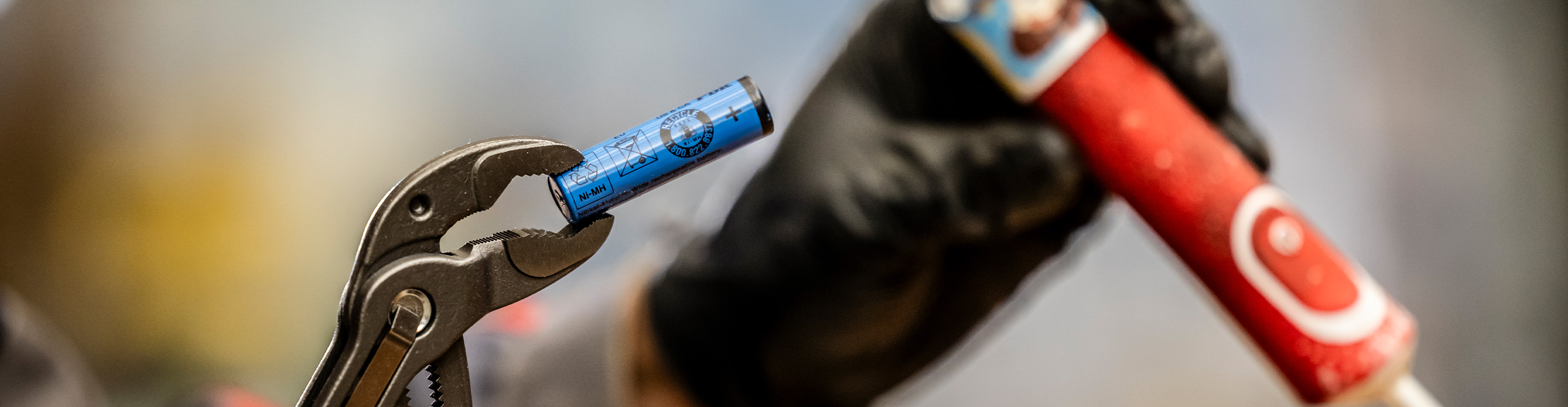
When disposed of improperly, batteries and lithium-ion devices pose a serious fire risk – for collection points, recycling facilities and the waste management sector as a whole. The national “Brandgefährlich” (Fire Hazard) campaign, launched in 2024 by SENS eRecycling, Swiss Recycle, INOBAT and Swico, continued to raise awareness of these risks in 2025 and helped collection points handle these hazardous items safely and properly.
High-visibility campaign
At the heart of the campaign were versatile information and awareness-raising materials: posters, flyers and stickers featuring the “Brandgefährlich” visual were displayed at numerous collection points, helping to draw attention to the issue. The visual has since also appeared on a number of waste collection vehicles and rear windows, significantly extending the campaign’s reach.
High demand for workshops
The campaign also included webinars and workshops offering practical tips for collection point teams and municipalities. The webinars in German and French were well attended, and the two German-speaking workshops were booked up quickly.
SENS eRecycling experts provided practical guidance at the workshops on the safe collection, storage and transport of lithium-ion batteries. The focus was on practical safety measures – such as consistently taping over battery terminals to prevent short circuits – as well as organisational and technical aspects of handling devices that could pose a fire risk.
Plans for 2026
The “Brandgefährlich” information materials will continue to be available free of charge to raise awareness of the risks of improper battery disposal and to enhance safety in the waste management sector. In September 2026, the workshop will be offered in French for the first time, bringing comprehensive safety guidance to French-speaking Switzerland.
Conclusion
The “Brandgefährlich” (FIre Hazard) campaign is raising awareness among consumers, municipalities and collection point teams throughout Switzerland of the risks of improper battery disposal, paving the way for safe and proper battery collection.